Best Ways to Track Food Recalls for Your Family
By the EatSure teamPublished 3 min read
On this page
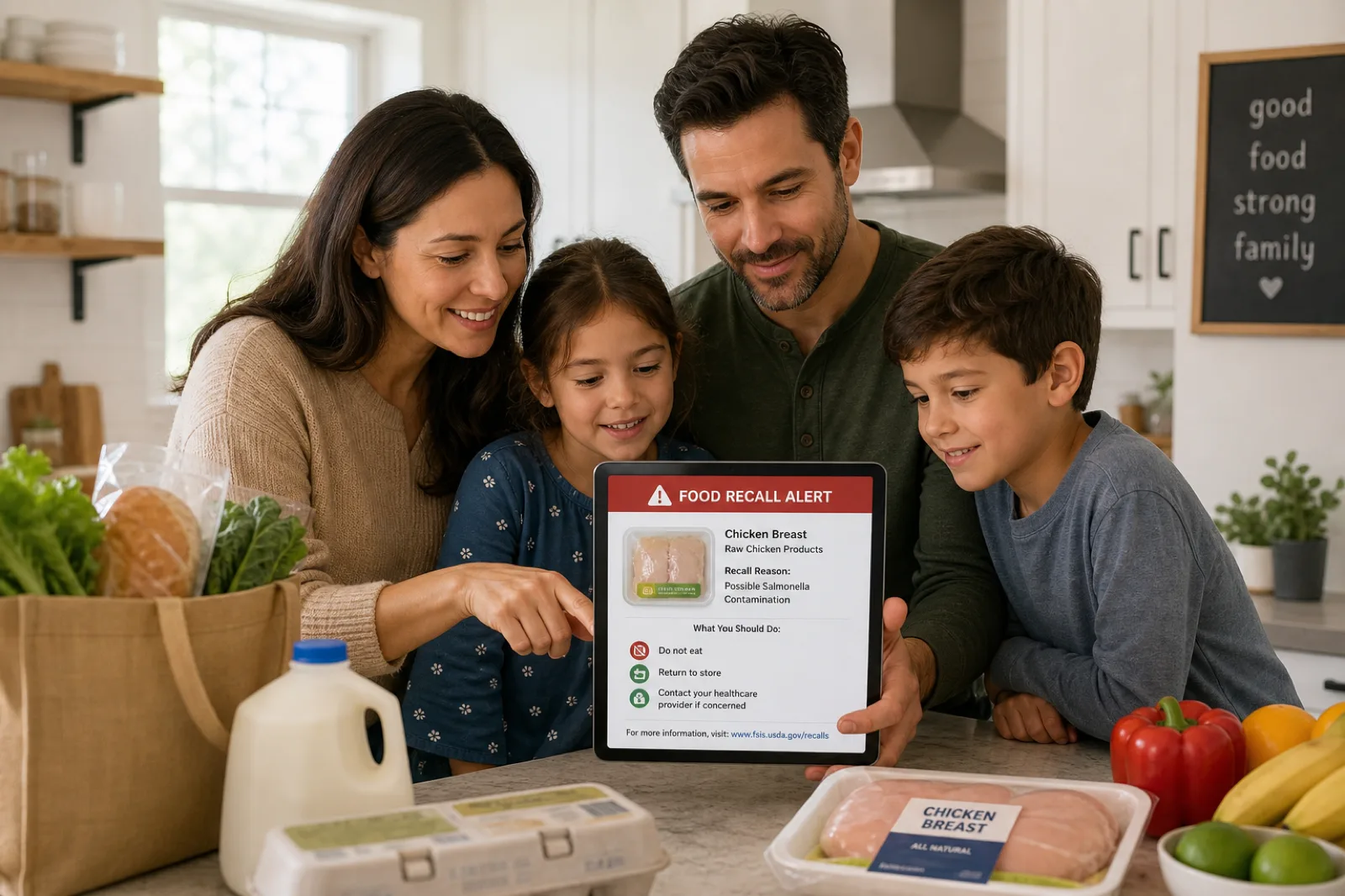
When a food recall hits the news, the first thought for most parents and caregivers is simple: Did we buy that? If you have young children, elderly family members, or anyone with food allergies at home, that question carries extra weight. Contaminated or mislabeled food can be far more dangerous for vulnerable people.
In 2025, allergen mislabeling was the number one cause of FDA food recalls, accounting for 115 out of 251 total events — nearly 46%, according to Esko/GlobalVision analysis. The most common undeclared allergen was milk and dairy, followed by tree nuts, wheat, peanuts, sesame, and soy. For families managing allergies, a single missed recall could mean a trip to the emergency room.
Here's how to build a practical system for keeping your family safe.
Why Families Face Higher Risks
Not all food recalls carry the same risk for everyone. But certain groups are more vulnerable:
- Children under 5
- Elderly adults
- People with food allergies
- Pregnant women
Method 1: Check Government Websites Directly
The most basic approach is to visit the official recall pages:
- FDA Recalls, Market Withdrawals, & Safety Alerts at fda.gov
- USDA FSIS Recall Case Archive at fsis.usda.gov
You can browse recalls by date, product, or reason. This is free and reliable, but it requires you to check regularly and sift through recalls that may not apply to your family.
Method 2: Subscribe to Government Email Alerts
Both the FDA and USDA offer free email alert subscriptions. You'll receive notifications when new recalls are posted. This is a step above manually checking, but the alerts aren't personalized — you'll hear about every recall, whether it's relevant to your household or not.
For families with allergies, this means scanning every email for allergen-related recalls, which can feel like searching for a needle in a haystack.
Method 3: Use a Recall Alert App
Several apps and tools now exist that aggregate recall data from FDA and USDA databases and send you push notifications on your phone. The best ones let you:
- Filter by category
- Filter by allergen
- Get real-time alerts
This is especially valuable for families managing multiple dietary needs. Instead of reading every recall notice, you see only what matters.
Method 4: Scan Your Grocery Receipts
Beyond app alerts, some tools now let you track recalls using your grocery receipts. By uploading a photo of your receipt, the app cross-references every item you purchased against the current recall database — so you know exactly if something sitting in your kitchen right now is affected.
For busy families, this is the most practical approach. You do one grocery run, snap a photo of the receipt, and you're covered. If anything you bought is recalled days or weeks later, you'll get a personalized alert.
With EatSure, this takes about 10 seconds per shopping trip. The app reads your receipt, identifies the products, and monitors them against ongoing and future recalls. No more guessing whether that cheese or those frozen meals are safe.
Method 5: Create a Family Food Safety Routine
Technology helps, but building a simple habit makes it stick:
- Designate a "recall checker" in your household.
- Scan every receipt after grocery shopping.
- Check before cooking if you see a recall notification.
- Talk to your kids about not eating food that's been set aside.
- Keep a list of allergens relevant to your family and share it.
The Stakes Are Real
In 2024, 1,392 people were sickened by recalled food products, up from 1,118 in 2023, according to PIRG's "Food for Thought" report. Class I recalls — those with the highest health risk — grew 36.4% between 2021 and 2025, per Trace One analysis. The problem isn't getting smaller; it's growing.
Your family doesn't have to be caught off guard. See if anything in your fridge is recalled right now — download EatSure, set your allergy filters, and scan your latest receipt.