Which Food Categories Are Recalled Most Often? 2025 Data Breakdown
By the EatSure teamPublished 4 min read
On this page
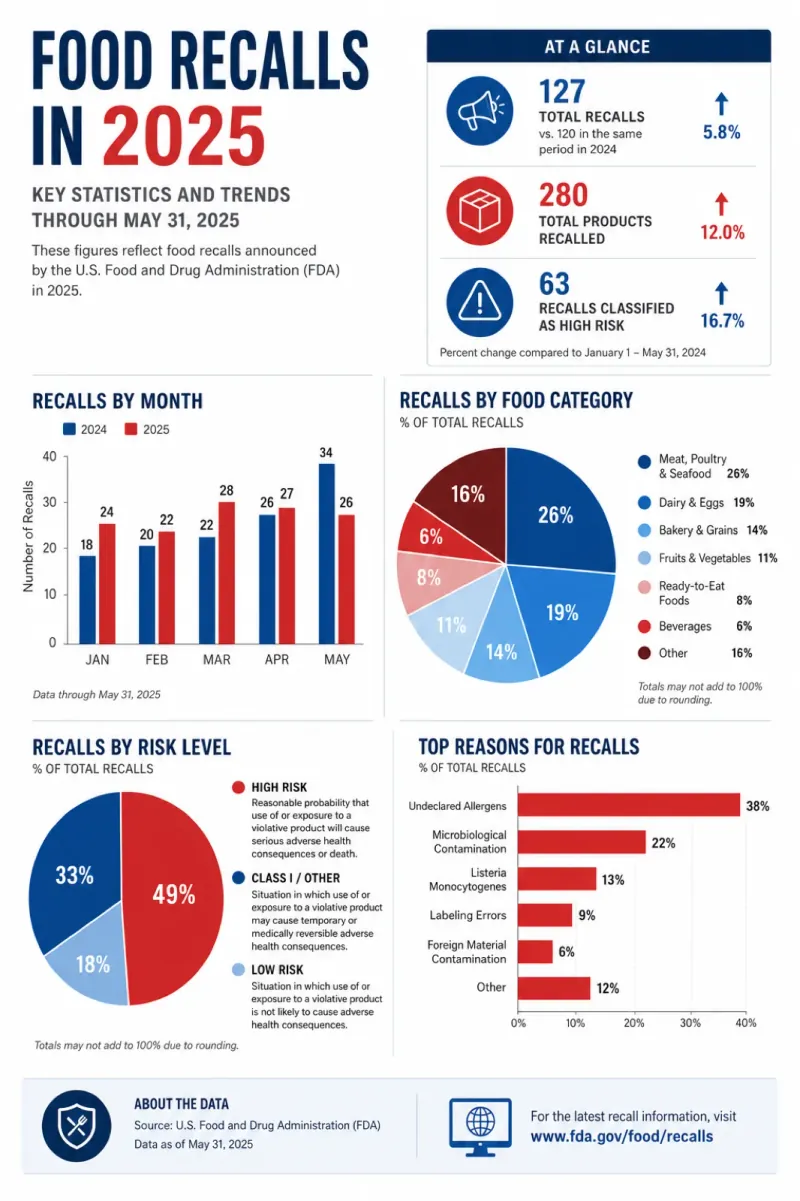
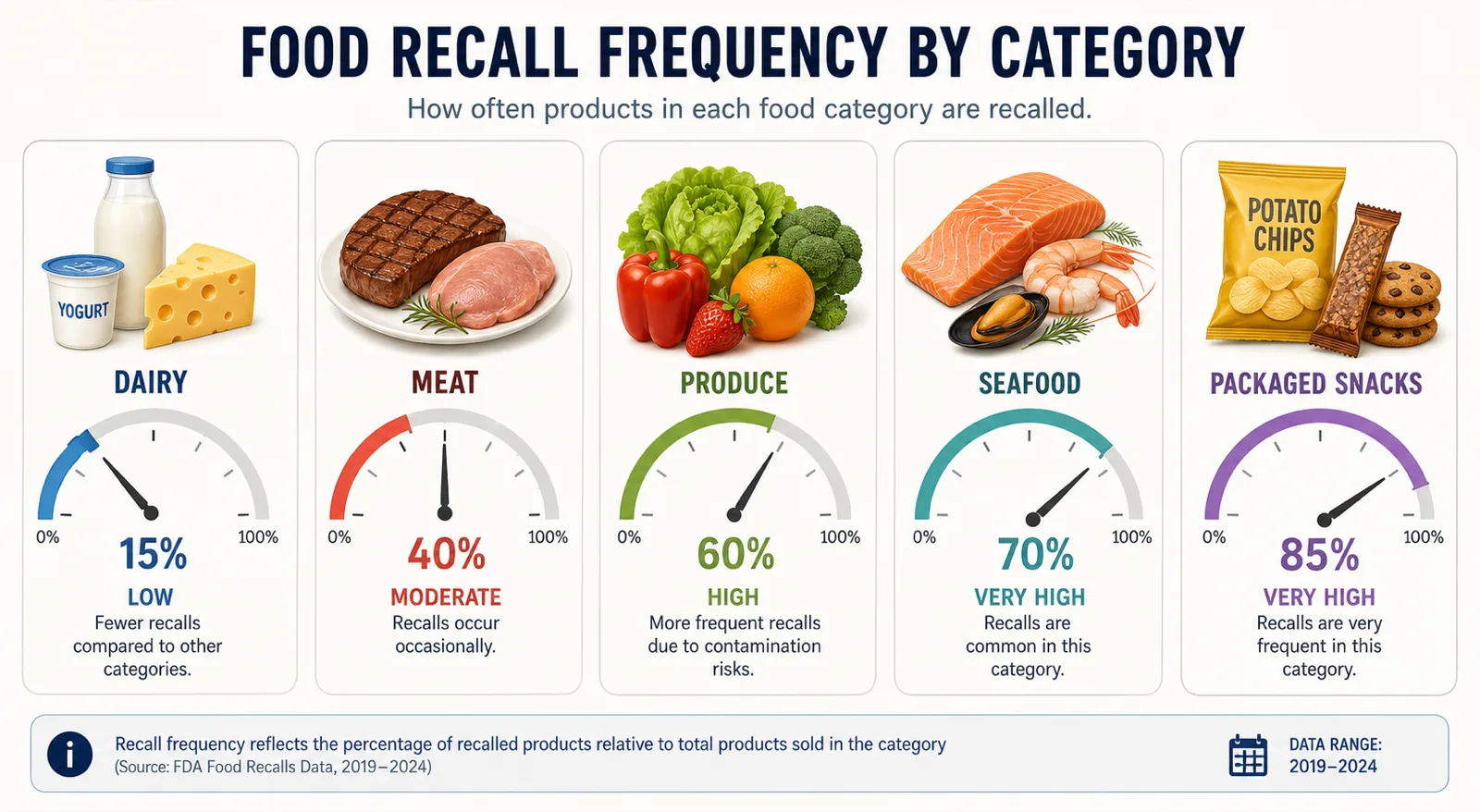
Not all foods carry the same recall risk. Some categories appear on FDA and USDA recall lists far more often than others — and the reasons vary. If you've ever wondered which food categories are recalled most often, the 2025 data paints a clear picture.
Using official USDA FSIS recall data and FDA enforcement reports, here's what you need to know about the types of food most likely to be pulled from shelves.
Meat and Poultry: High Volume, High Risk
The USDA's Food Safety and Inspection Service (FSIS) oversees recalls for meat, poultry, and certain egg products. In 2025, the USDA issued 42 recalls covering 71.4 million pounds of product — and the animal type breakdown reveals where the risk concentrates.
2025 USDA Recalls by Animal Type
- Swine (pork): 11 recalls
- Mixed origin: 10 recalls
- Chicken: 9 recalls
- Beef: 7 recalls
- Catfish: 3 recalls
- Turkey: 1 recall
- Sheep/Lamb: 1 recall
Swine (pork) products led with 11 recalls, followed closely by mixed-origin products (10) — which include items like sausages, deli meats, and prepared meals that combine multiple proteins. Chicken came third with 9 recalls, and beef accounted for 7.
Why Meat Gets Recalled
The top reasons for USDA meat recalls in 2025 were:
- Foreign material contamination — 13 recalls
- Undeclared allergens — 9 recalls
- Production without federal inspection — 7 recalls
- Import violations — 5 recalls
- Listeria contamination — 4 recalls
The 2024 BrucePac recall — covering approximately 12 million pounds of ready-to-eat meat for Listeria concerns — demonstrated the massive scale these recalls can reach (Source: USDA FSIS). The Boar's Head Listeria outbreak the same year killed 10 people and resulted in follow-up recalls extending into 2025.
Dairy Products: The Allergen and Pathogen Problem
Dairy occupies a unique position in the recall landscape. On the FDA side, undeclared milk was the most common allergen recall trigger in 2025, accounting for roughly 30% of all allergen-related recalls (Source: Esko/GlobalVision FDA data analysis).
But dairy also faces pathogen risks. The March 2026 RAW FARM E. coli O157:H7 recall affected raw cheddar cheese products sold at retailers including Sprouts Farmers Market and H-E-B, sickening 9 people including children under 5 — with 3 hospitalizations and 1 case of hemolytic uremic syndrome (Source: FDA.gov).
Raw and unpasteurized dairy products carry elevated risk because the pasteurization step that kills harmful bacteria is skipped.
Produce and Fresh Foods: Pathogen Hotspot
Fresh produce — including leafy greens, berries, and prepared salads — is a frequent source of pathogen-related recalls. The FDA's 2025 data showed Listeria monocytogenes in 42 recalls and Salmonella in 35, and ready-to-eat fresh foods are particularly vulnerable because they're often consumed without cooking.
The 2025 Fresh & Ready Foods Listeria outbreak involved prepared pasta meals and other ready-to-eat items — a reminder that even convenience foods aren't immune (Source: FDA/CDC).
Snacks and Packaged Foods: The Labeling Gap
Packaged snacks, baked goods, candy, and similar items may seem low-risk, but they're among the most frequently recalled categories for allergen mislabeling. Why?
- Complex supply chains with many ingredient suppliers
- Shared manufacturing equipment
- Seasonal or limited-edition products with rushed packaging
- Small-batch artisan products with manual labeling
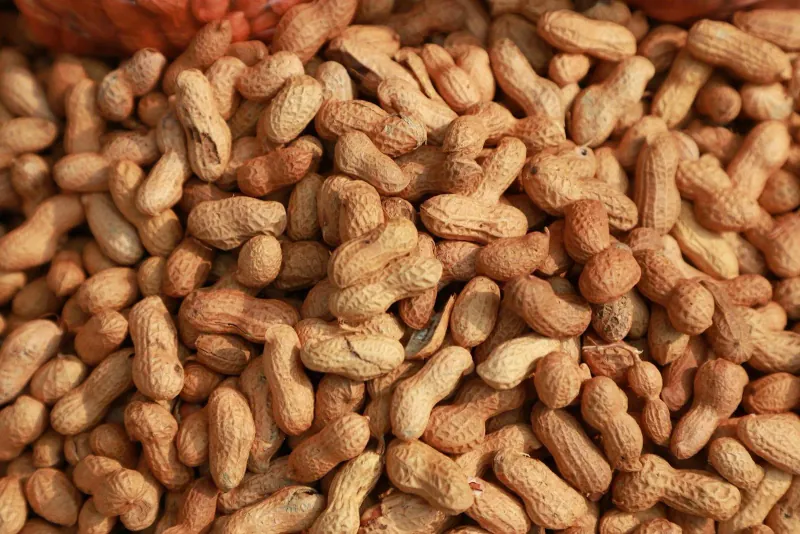
The 2026 Karns Foods recall of Mini Dark Chocolate Raspberry Cups — pulled for undeclared peanuts due to a "temporary breakdown in packaging processes" — is a textbook example. Only 26–42 packages were affected, but for a peanut-allergic consumer, that's enough to be life-threatening (Source: FDA.gov).
Mixed and Multi-Ingredient Products: The Hidden Risk
Products labeled as "mixed origin" on the USDA side accounted for 10 of 42 recalls in 2025. These are often multi-ingredient items like:
- Frozen dinners
- Prepared deli items
- Breakfast sandwiches
- Soups and stews
The more ingredients a product has, the more opportunities for something to go wrong — whether that's an undeclared allergen, a contaminated sub-component, or a foreign object introduced during processing.
The Pattern: Complexity Creates Risk
Looking across all food categories, a clear pattern emerges:
- More ingredients: Prepared meals, deli items, snacks
- Less processing (raw): Raw dairy, fresh produce
- High-volume production: Commodity meats, packaged snacks
- Shared manufacturing: Any product made in a multi-allergen facility
The foods we eat most often — and the foods that go through the most complex supply chains — tend to be recalled most often.
How to Protect Yourself Across All Categories
No food category is completely immune from recalls. Here's how to stay informed:
- Monitor both the FDA and USDA.
- Pay extra attention to multi-ingredient products.
- Be cautious with raw and unpasteurized foods, particularly dairy.
- Use EatSure to track recalls across every category in real time.
- Scan your grocery receipts with EatSure's receipt feature.
We track every one of these recalls in real time — across every food category. Download EatSure to see if anything in your kitchen is affected.