Food Recall Alerts: How to Set Them Up
By the EatSure teamPublished 4 min read
On this page
In 2025, there were 251 FDA food recall events and 42 USDA recalls — together covering tens of millions of pounds of food, according to Esko/GlobalVision and USDA FSIS data. That's nearly one recall announcement per day, on average.
Most people hear about recalls only when they make national news — like the 2024 Boar's Head Listeria outbreak that killed 10 people, or the 12-million-pound BrucePac meat recall. But the vast majority of recalls happen quietly. If you're not actively looking, you'll miss them.
The good news? Setting up food recall alerts takes just a few minutes, and the options range from free government emails to smart, personalized app notifications.
Option 1: FDA Email Alerts (Free)
The FDA offers a free email subscription service for recall notifications.
How to set it up: 1. Go to fda.gov. 2. Navigate to Safety → Recalls, Market Withdrawals, & Safety Alerts. 3. Look for the email subscription or RSS feed option. 4. Enter your email address and select your preferences.
What you'll get: Regular emails listing new recalls across food, drugs, cosmetics, and medical devices.
Limitations:
- Alerts are not personalized — you'll get notifications about all recalls, not just food.
- No filtering by allergen, brand, or store.
- Email delivery can lag behind the actual announcement.
Option 2: USDA FSIS Alerts (Free)
The USDA's Food Safety and Inspection Service handles recalls for meat, poultry, and processed egg products — a separate system from the FDA.
How to set it up: 1. Go to fsis.usda.gov. 2. Find the "Email Updates" or GovDelivery subscription link. 3. Subscribe to FSIS recall notifications.
What you'll get: Email alerts specifically about meat and poultry recalls.
Limitations:
- Only covers USDA-regulated products (no produce, dairy, snacks, etc. — those are FDA).
- Same lack of personalization as FDA emails.
Important note: Many people don't realize that food safety in the US is split between two agencies. The FDA oversees about 80% of the food supply, while the USDA covers meat, poultry, and eggs. To get complete coverage, you need alerts from both.
Option 3: Recall Alert Apps (Recommended)
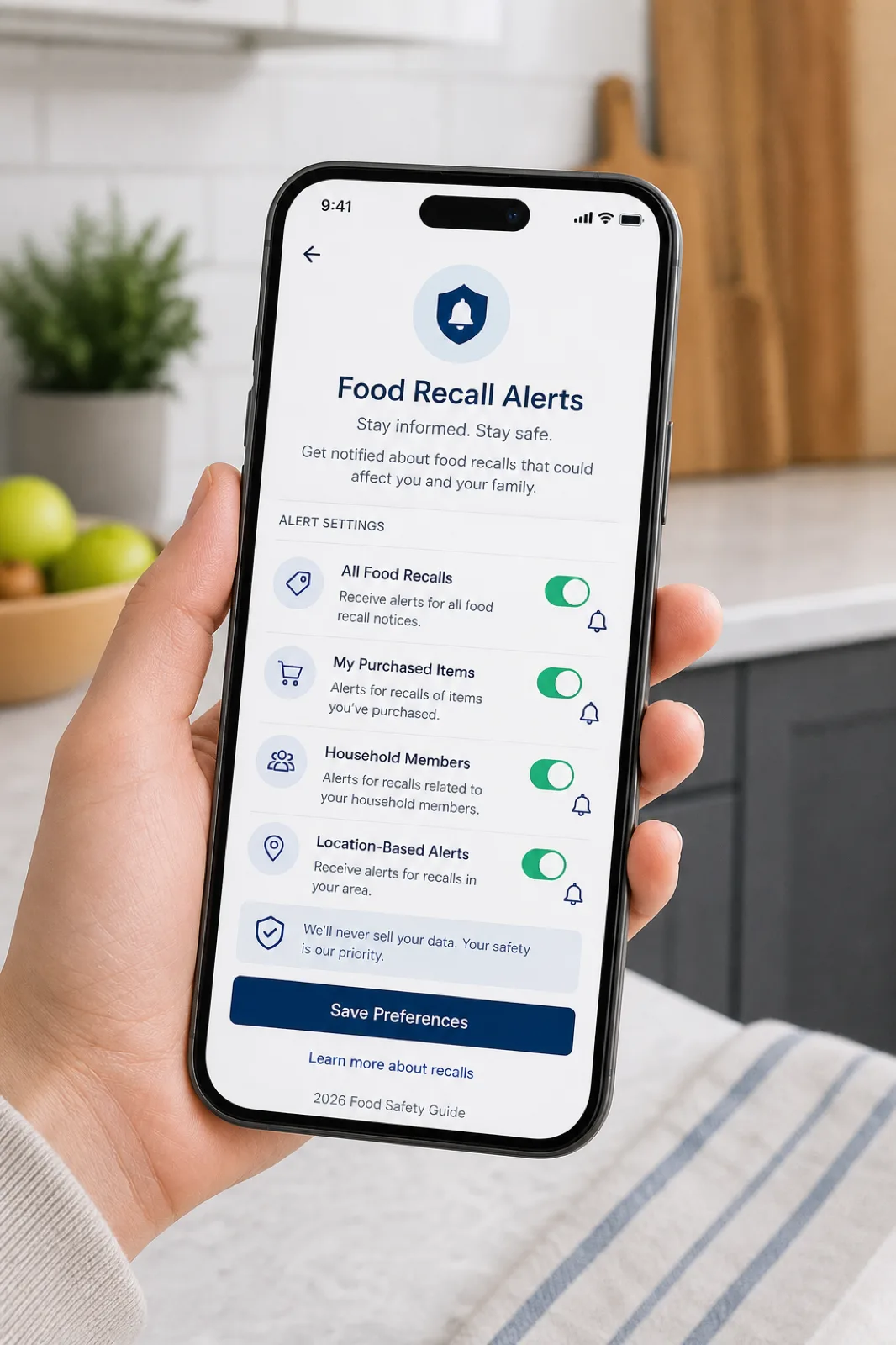
Several apps and tools now aggregate data from both FDA and USDA databases, giving you a single source for all food recall alerts.
Advantages over government emails:
- Real-time push notifications: You're alerted within minutes, not days.
- Single source: No need to monitor two separate agencies.
- Filtering: Many apps let you filter by food category, allergen, or region.
- Mobile-first: Alerts go straight to your phone.
When choosing a recall alert app, look for:
- Coverage of both FDA and USDA recalls
- Push notifications (not just email)
- Allergen filtering options
- A clean, easy-to-read interface
Option 4: Receipt-Based Tracking (Smartest Approach)
Beyond app alerts, some tools now let you track recalls using your grocery receipts. By uploading a photo of your receipt, the app cross-references every item you purchased against the current recall database — so you know exactly if something sitting in your kitchen right now is affected.
This solves the biggest problem with all other alert methods: relevance.
Standard alerts tell you a product was recalled. Receipt-based tracking tells you your product was recalled.
How it works with EatSure: 1. Download EatSure and create a free account. 2. After each grocery trip, open the app and snap a photo of your receipt. 3. The app reads the items, identifies the products, and logs them. 4. If any product is recalled — now or in the future — you get a personalized alert. 5. The alert tells you exactly which item, when you bought it, and what to do next.
No UPC scanning. No manual searching. No wondering if a recall applies to you.
The Best Setup: Layer Your Alerts
For maximum protection, combine methods:
- Subscribe to FDA and USDA emails for broad awareness.
- Install a recall alert app for real-time push notifications.
- Use receipt scanning for personalized, purchase-specific alerts.
This layered approach means nothing slips through the cracks. You're covered whether the recall is a massive nationwide event or a small, regional issue affecting just 26 packages — like the Karns Foods chocolate cup recall in April 2026, which involved undeclared peanuts in a very limited batch sold only in Pennsylvania.
Why Speed Matters
The 2026 RAW FARM E. coli recall illustrates why fast alerts are critical. The FDA recommended a recall on March 15, 2026, but the company didn't initiate one until April 2. During that 18-day gap, contaminated raw cheddar cheese remained on shelves and in people's refrigerators. Nine people were sickened — over half of them children under 5, according to the FDA.
The sooner you know, the sooner you can act.
See if anything in your fridge is recalled right now — set up EatSure alerts and scan your latest receipt today.