Undeclared Allergens: The #1 Cause of Food Recalls in 2025
By the EatSure teamPublished 4 min read
On this page
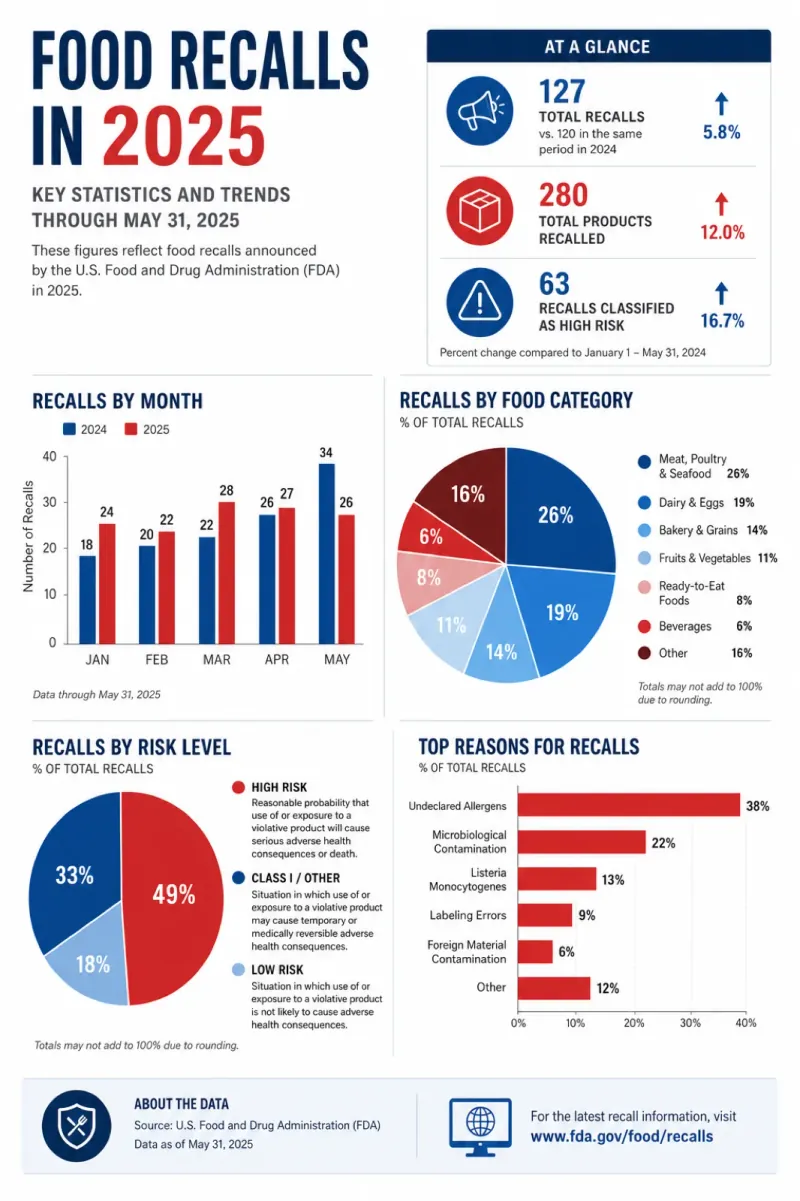
If you or someone in your family has a food allergy, here is a number that should get your full attention: 45.8%. That's the share of all FDA food recalls in 2025 caused by a single issue — undeclared allergens on product labels (Source: Esko/GlobalVision analysis of FDA data).
Out of 251 FDA food and beverage recall events in 2025, 115 were triggered by allergen mislabeling. That means nearly every other recall involved food that contained an allergen not listed on the package. For the estimated 33 million Americans living with food allergies, every one of those mislabeled products represented a potentially life-threatening encounter.
This is not a new problem. But the data shows it's getting worse, not better.
The Scale of the Allergen Recall Crisis
Undeclared allergens have been the leading cause of food recalls for years. Across the 5-year period from 2021 to 2025, allergen contamination accounted for nearly half (45.2%) of all food recalls (Source: Trace One Analysis).
In 2025 specifically:
- FDA: 115 of 251 recalls (45.8%) were for undeclared allergens
- USDA: 9 of 42 recalls were for undeclared allergens
Combined, allergen mislabeling was responsible for more recalls than bacterial contamination, foreign objects, chemical hazards, and all other causes combined on the FDA side.
Which Allergens Are Missed Most Often?
Not all allergens are mislabeled equally. The 2025 FDA data shows a clear hierarchy:
1. Milk and Dairy — ~30% of Allergen Recalls
Undeclared milk was the single most common allergen recall trigger in 2025, involved in roughly 30% of all allergen-related FDA recalls.
Milk proteins can hide in unexpected places: chocolate, baked goods, seasonings, sauces, and processed meats.
2. Tree Nuts
The second most common undeclared allergen. Tree nut allergies (almonds, walnuts, cashews, pecans, etc.) can cause severe anaphylaxis.
Cross-contamination in facilities that process multiple nut varieties is a frequent cause.
3. Wheat
Undeclared wheat affects people with celiac disease and wheat allergies.
Wheat-based ingredients can appear under many names, making labeling errors more likely.
4. Peanuts
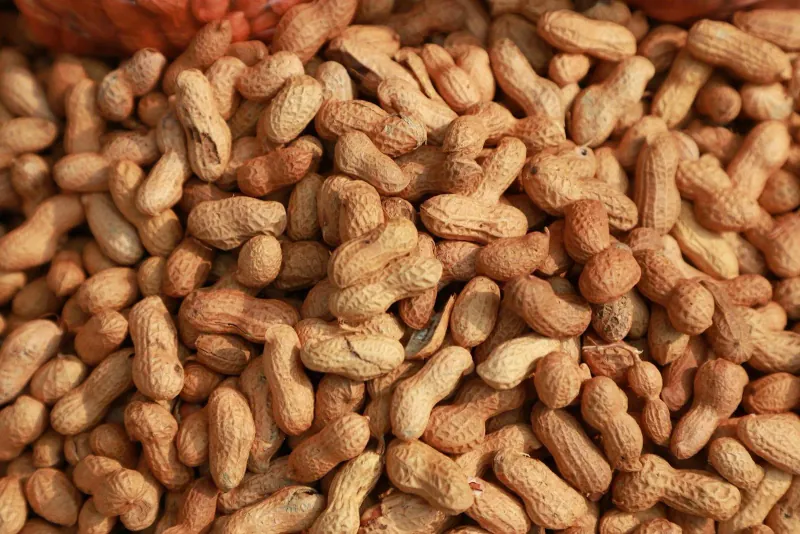
One of the most recognized allergens, peanut contamination was behind several notable recalls in 2025 and 2026 — including the Karns Foods Mini Dark Chocolate Raspberry Cups recall in April 2026, caused by a "temporary breakdown in packaging processes" (Source: FDA.gov).
5. Sesame
Sesame was officially designated as a major allergen in the U.S. under the FASTER Act of 2021, which took full effect in January 2023. As manufacturers adjust to new labeling requirements, sesame-related recalls have become more visible.
6. Soy
Soy proteins are widespread in processed foods and are frequently involved in cross-contamination events.
Why Are So Many Allergens Going Undeclared?
Understanding why allergen mislabeling happens is key to understanding why it keeps happening:
Shared Production Lines
Many food manufacturers use the same equipment to produce different products. If a production line makes a peanut-containing product followed by a peanut-free product, trace amounts of peanut protein can transfer — even after cleaning.
Packaging and Labeling Errors
The wrong label applied to the wrong product is one of the most common recall scenarios. A product may be safe on its own, but if it's sealed in packaging meant for a different item, the listed ingredients won't match.
Supplier Ingredient Changes
Manufacturers rely on ingredient suppliers who may change formulations without adequate notice. An ingredient labeled "natural flavoring" might contain milk or soy derivatives that weren't present in earlier batches.
Small-Batch and Artisan Production
Smaller producers may lack the sophisticated quality control systems that large manufacturers use. Manual packaging processes are more error-prone.
The Human Cost
Allergen recalls are classified as serious for good reason. According to the CDC, food allergies send more than 200,000 Americans to the emergency room every year and cause approximately 200 deaths annually. Anaphylaxis — the most severe allergic reaction — can be fatal within minutes if not treated with epinephrine.
In 2024, 1,392 people were sickened by recalled food products overall (Source: PIRG Food for Thought 2025). While not all of these were allergen-related, the sheer volume of allergen recalls — nearly half of all events — makes it statistically inevitable that undeclared allergens are harming people regularly.
Children are particularly vulnerable. They may not recognize the symptoms of an allergic reaction, and they rely on adults to check labels for them.
The Regulatory Landscape
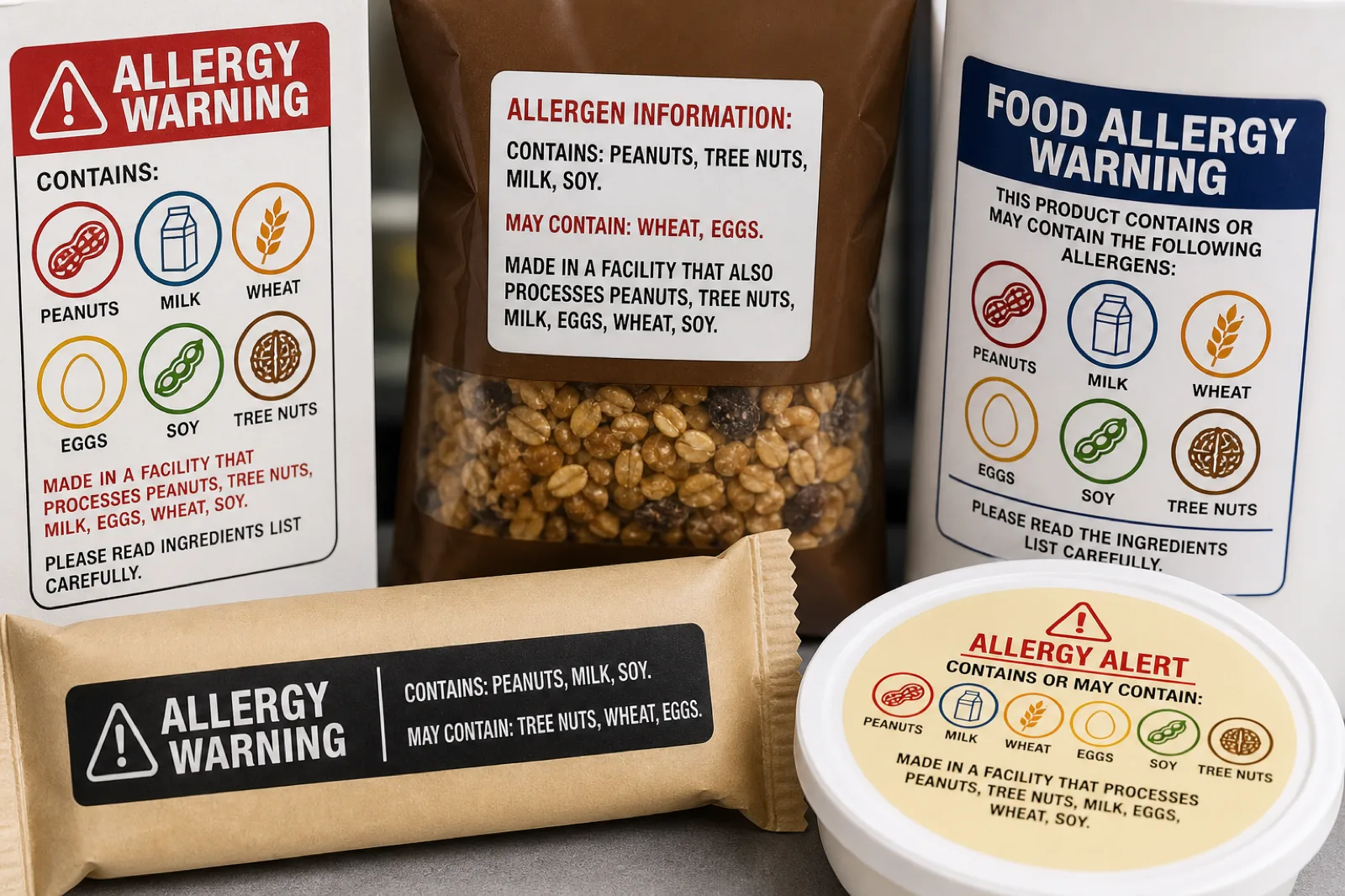
The FDA requires food manufacturers to declare the presence of nine major allergens on product labels:
- Milk
- Eggs
- Fish
- Shellfish
- Tree nuts
- Peanuts
- Wheat
- Soybeans
- Sesame (added January 2023 under the FASTER Act)
Failure to declare any of these allergens on a product label is a violation that can trigger a recall. However, "may contain" warnings for potential cross-contamination are voluntary — not required by law.
This means a product could be contaminated with peanuts during manufacturing and not carry any warning at all, as long as peanuts aren't an intentional ingredient.
How the 5-Year Trend Looks
The persistence of allergen recalls over 5 years is concerning:
- 2021–2025 average — allergen share of all recalls: 45.2%
- 2025 (FDA) — allergen share of all recalls: 45.8%
Despite increased regulatory attention and the FASTER Act adding sesame to the mandatory list, the proportion of allergen-driven recalls has remained stubbornly high — slightly increasing, in fact.
What You Can Do to Stay Safe
For Individuals with Allergies
- Always read the full ingredients list.
- Be cautious with new products.
- Check recalls regularly.
- Carry epinephrine.
For Families
- Teach children to check labels.
- Inform schools and caregivers about specific allergies.
- Use a recall tracking tool like EatSure.
- Scan your grocery receipts with EatSure.
We track every allergen recall the moment it's announced. Download EatSure to protect your family.