How the FDA Food Recall Process Works (Step by Step)
By the EatSure teamPublished 3 min read
On this page
Every week, roughly five new food recalls are announced in the United States, according to an analysis of 251 FDA food and beverage recall events in 2025 (Esko/GlobalVision). Yet most people have no idea how those recalls actually happen behind the scenes. Understanding the FDA food recall process can help you react faster — and protect your family before contaminated products cause harm.
The recall system is designed to remove dangerous foods from the market, but it involves multiple stages, multiple agencies, and sometimes frustrating delays. Here is exactly how the process works, from start to finish.
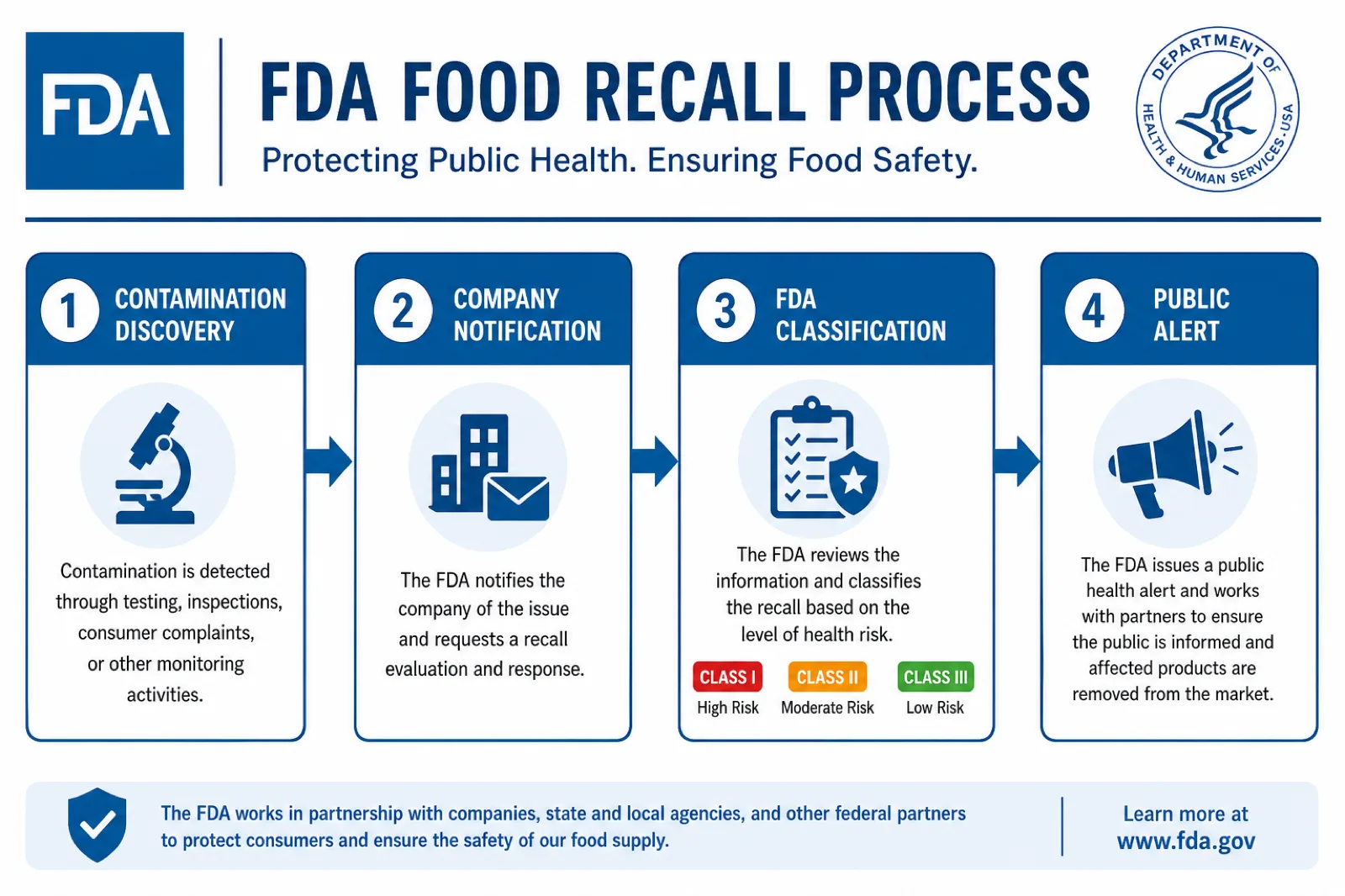
Step 1: A Problem Is Discovered
The FDA food recall process begins when someone identifies a potential safety issue. This can happen several ways:
- Company testing — A manufacturer's internal quality checks
- Consumer complaints — Someone reports illness
- Government inspection — FDA or state inspectors discover a problem
- Outbreak investigation — The CDC detects a cluster of illnesses
For example, the 2024 Boar's Head Listeria outbreak was identified after the CDC linked cases of listeriosis across 18 or more states to deli meat products. That investigation ultimately led to one of the deadliest food outbreaks in recent years, with 10 deaths and dozens of hospitalizations (source: USDA FSIS).
Step 2: Investigation and Lab Testing
Once a problem is flagged, the FDA (or CDC) begins a formal investigation. This includes:
- Collecting samples from the product and the production facility
- Lab analysis to confirm the contaminant
- Traceback to determine where in the supply chain the contamination occurred
This investigation phase can take days or even weeks. In the March 2026 RAW FARM E. coli O157:H7 raw cheddar cheese outbreak, the FDA recommended a recall on March 15, 2026, but the firm initially declined. The formal recall was not initiated until April 2, 2026 — more than two weeks later — during which time 9 people became ill, including children under 5 (source: FDA.gov).
Step 3: The FDA Classifies the Recall
After confirming the hazard, the FDA assigns the recall a classification:
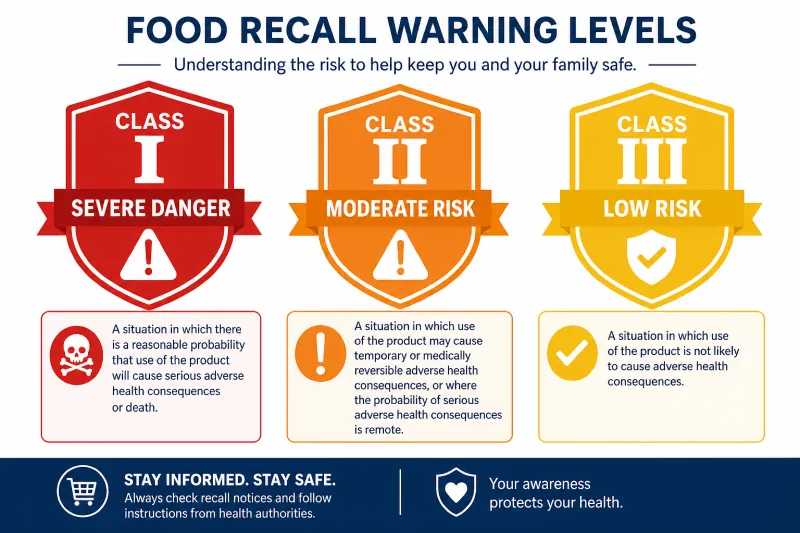
- Class I — a situation where there is a reasonable probability that eating or being exposed to the product will cause serious adverse health consequences or death.
- Class II — a situation where eating the food may cause temporary or medically reversible health problems, or where the probability of serious harm is remote.
- Class III — a situation where eating the food is unlikely to cause adverse health consequences.
In 2025, a Trace One analysis found that Class I recalls grew by 36.4% over the previous five-year period (2021–2025), meaning the most dangerous recalls are becoming more common.
Step 4: Public Notification
Once classified, the recall is posted on the FDA's official recall page (FDA.gov/safety/recalls).
The announcement includes:
- The product name, brand, and description
- Lot numbers, UPC codes, and expiration dates
- The reason for the recall
- What consumers should do (dispose of the product or return it)
- Whether any illnesses have been reported
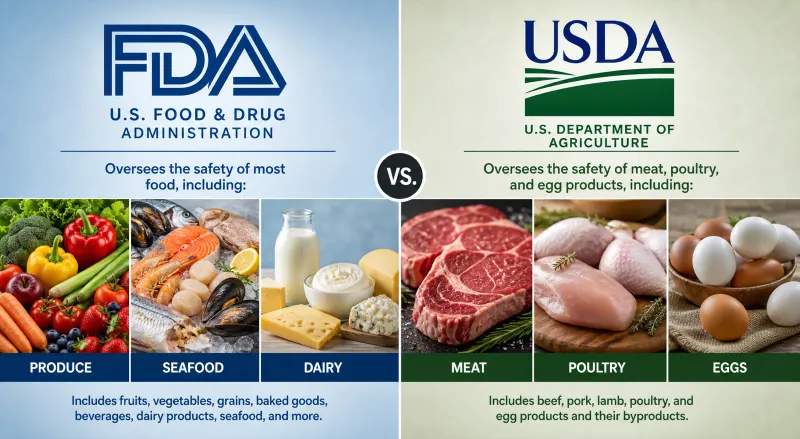
Retailers are notified and are expected to pull the product from shelves. However, products already in consumers' homes are far harder to reach — which is where personal alert tools become essential.
Step 5: Monitoring and Resolution
The FDA continues to monitor the recall to ensure the company has effectively removed the product from the market. This may include follow-up inspections and additional testing. In serious cases, the FDA can pursue legal action, including seizure of products or injunctions against the company.
For the October 2024 BrucePac recall, approximately 12 million pounds of ready-to-eat meat and poultry were recalled due to possible Listeria contamination — one of the largest meat recalls in U.S. history (source: USDA FSIS).
Monitoring a recall of that scale required coordination across hundreds of retailers nationwide.
How to Stay Ahead of the Recall Process
The official process is thorough — but it is not fast. By the time a recall is posted on FDA.gov, weeks may have passed since the contamination was first detected. For everyday consumers, checking the FDA website manually every day is not realistic.
EatSure monitors FDA and USDA recall databases in real time and sends you alerts the moment a new recall is announced. Even better, if you upload your grocery receipts, EatSure cross-references every item you purchased against the current recall database — so you know immediately if something in your kitchen is affected.
Staying informed is your best defense. Knowing how the process works helps you understand why speed matters — and why having a tool that watches for you can make all the difference.