What Happens to Recalled Food After It Leaves Shelves?
By the EatSure teamPublished 4 min read
On this page
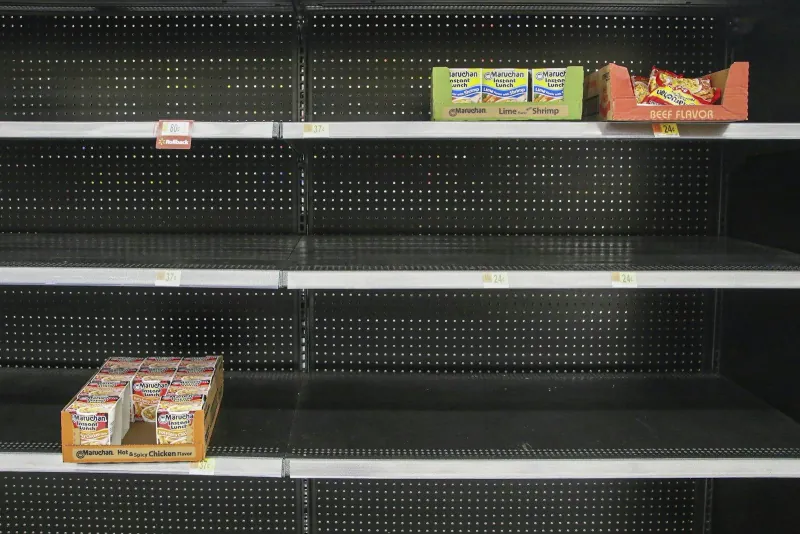
When a food recall is announced, the immediate advice is clear: stop eating the product, throw it away, or return it for a refund. But have you ever wondered what happens to recalled food after it is pulled from store shelves? The journey of recalled food — from grocery aisles to destruction or disposal — involves a complex process managed by manufacturers, retailers, and federal regulators.
Understanding what happens to recalled food can give you more confidence in the system — and help you understand why acting quickly when you hear about a recall matters.
Step 1: Retailers Remove the Product
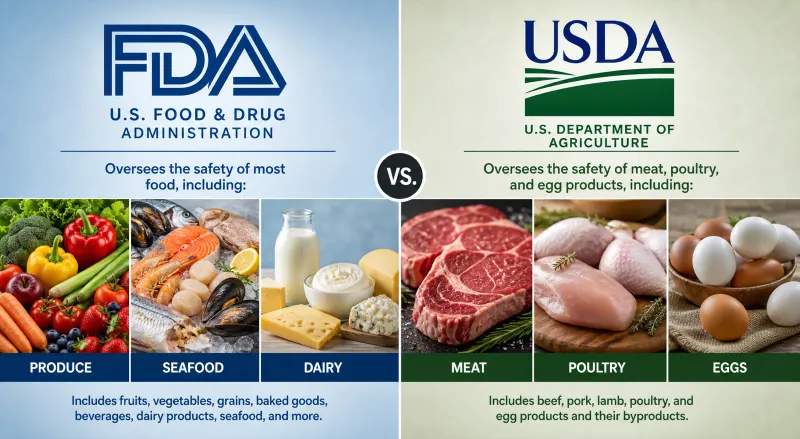
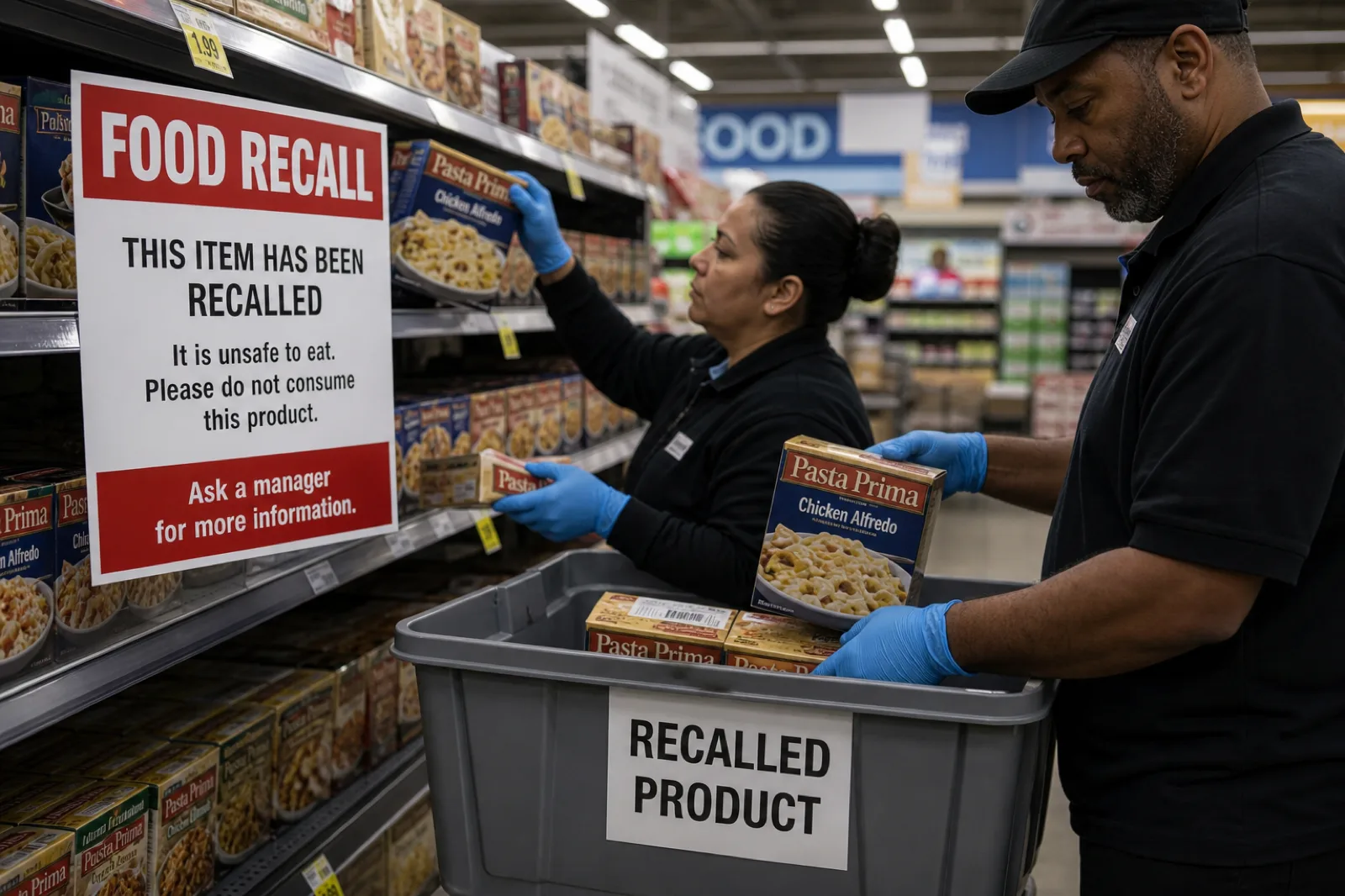
The moment a recall is announced by the FDA or USDA, retailers are notified. Major grocery chains and distributors have recall coordinators who manage the process of identifying and pulling the affected products.
Store employees search shelves, storage rooms, and distribution warehouses for the specific product name, lot numbers, UPC codes, and date codes listed in the recall notice. In large-scale recalls, this can be a massive undertaking. When BrucePac recalled approximately 12 million pounds of ready-to-eat meat and poultry in October 2024 due to possible Listeria contamination, retailers nationwide had to comb through their inventory to identify affected products (source: USDA FSIS).
Stores typically quarantine the recalled items separately — pulling them from the sales floor and setting them aside in a designated area until they can be returned to the manufacturer or properly disposed of.
Step 2: Return Logistics and Supply Chain Coordination
Once removed from shelves, recalled products enter a reverse logistics process. Depending on the recall arrangement:
- Return to manufacturer
- Return to distributor
- Destruction at retail
This process requires careful record-keeping. Every unit must be accounted for. The FDA and USDA track "recall effectiveness" — a measure of how much of the affected product has been successfully removed from the market.
Step 3: Destruction or Reconditioning
What ultimately happens to the physical product depends on the nature of the recall:
Destruction
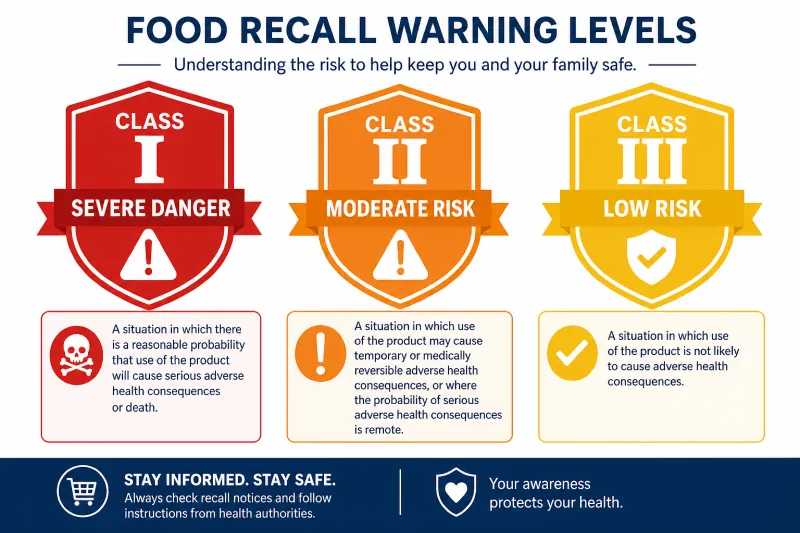
Most recalled food — particularly Class I recalls involving dangerous pathogens like Listeria, Salmonella, or E. coli — is destroyed.
Destruction methods include:
- Incineration — Burning the product at high temperatures
- Landfill disposal
- Rendering — Converting animal products into non-food materials
The destruction must be documented, and in many cases, it is witnessed or verified by government inspectors.
Reconditioning
In limited cases — typically for Class II or Class III recalls — the product may be "reconditioned" rather than destroyed. This means the safety issue is corrected so the product can be re-released. Examples include:
- Relabeling — If a product was recalled for a labeling error
- Reprocessing — In rare cases, a product might be cooked
Reconditioning must be approved and verified by the FDA or USDA before the product can be sold again.
Step 4: Consumer Refunds and Returns
If you have a recalled product at home, you are generally entitled to a refund. The recall announcement typically includes instructions:
- Return to the store — Bring the product (or the receipt) back
- Contact the manufacturer
- Dispose and claim
For the April 2026 Karns Foods Mini Dark Chocolate Raspberry Cups recall (undeclared peanuts), the company instructed consumers to return the product to Karns Foods locations in Pennsylvania for a full refund (source: FDA.gov).
Only 26 to 42 packs were affected, making it a targeted recall with straightforward return logistics.
In larger recalls, the refund process can be more complex. During the Boar's Head Listeria recall in 2024 — with products distributed across 18 or more states — consumers were advised to check their refrigerators for any Boar's Head deli products from the affected facility and either return them or throw them away (source: USDA FSIS).
Step 5: FDA and USDA Verification
Both the FDA and USDA conduct follow-up activities to ensure the recall was effective:
- Effectiveness checks — Regulators contact retailers
- Audit of records — The company must provide documentation
- Facility inspections
The goal is to verify that all affected product has been accounted for and that the root cause has been addressed to prevent a recurrence. For example, after the Fresh & Ready Foods Listeria outbreak in 2025, the FDA reopened its investigation in April 2025 after Listeria was found in environmental samples — indicating that even after a recall, ongoing monitoring is critical (source: FDA.gov).
The Gap: Product Already in Your Home
The most challenging part of any recall is reaching products already purchased by consumers. Retailers can pull items from shelves, but no one can walk into your kitchen. The FDA and USDA rely on media coverage, social media, and their own websites to spread the word — but studies consistently show that many consumers never hear about recalls that affect products they have already bought.
This is exactly the problem EatSure is designed to solve. By monitoring every recall from both the FDA and USDA and matching them against your actual grocery purchases (via uploaded receipts), EatSure bridges the gap between the recall announcement and your kitchen. If something sitting in your refrigerator right now has been recalled, you will know — even if you missed the news.
Recalled food does not just disappear. It goes through a rigorous process of removal, documentation, and destruction. But the system works best when consumers know to check their homes, too.