Why Food Recalls Are Announced Weeks After Contamination
By the EatSure teamPublished 4 min read
On this page
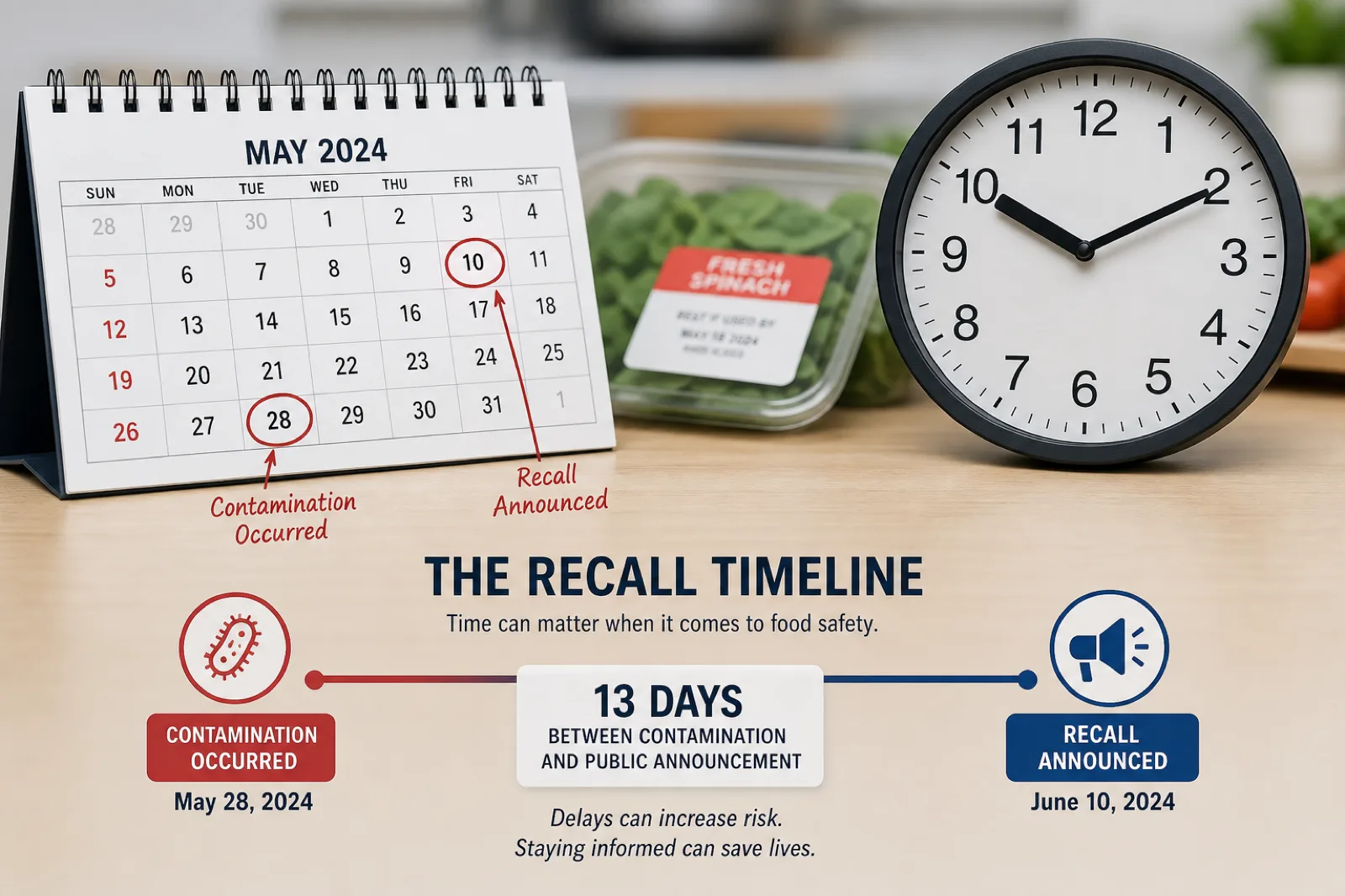
If you have ever seen a food recall announcement and wondered, "Why are they just telling us now?" — you are not alone. The gap between when food contamination occurs and when consumers are actually warned is one of the most frustrating parts of the U.S. food safety system.
Understanding why food recalls are delayed can help you take smarter steps to protect your family.
The truth is, the delay is not usually caused by a single failure. It is the result of a complex chain of investigation, testing, tracing, and legal review — each step necessary, but each one adding days or weeks before the public finds out.
The Investigation Must Come First
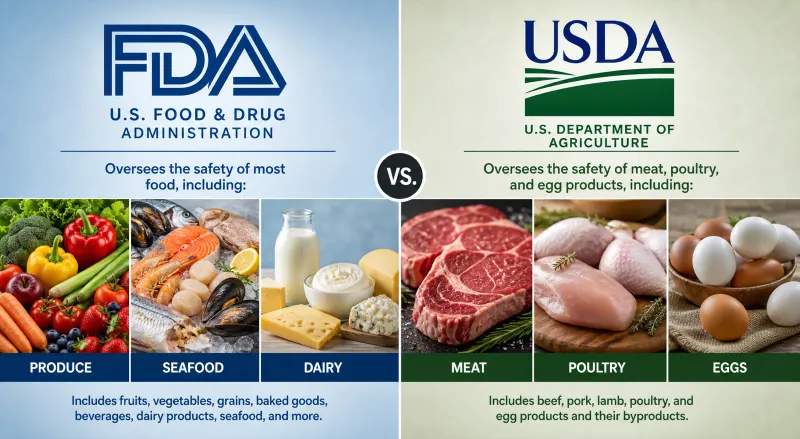
Before a recall can be announced, the FDA or USDA needs to confirm there is actually a problem. This is not as simple as it sounds.
When the CDC detects a cluster of illnesses, epidemiologists must first determine whether the cases are connected. They interview sick people about what they ate, where they shopped, and when symptoms started. This process — called an epidemiological investigation — can take weeks, especially when cases are spread across multiple states.
In the 2024 Boar's Head Listeria outbreak, cases were identified in 18 or more states. Connecting those cases to a single product — liverwurst and other deli meats from one facility — required painstaking detective work. By the time the recall was announced, 10 people had died (source: USDA FSIS).
Lab Testing Takes Time
Once investigators suspect a specific product, laboratory testing must confirm the contamination. Scientists collect samples from the product, the production facility, and sometimes retail locations. These samples are then analyzed for specific pathogens.
Lab cultures for bacteria like Listeria or Salmonella typically take 24 to 72 hours to grow. But confirming the genetic match between the bacteria in the food and the bacteria making people sick — using whole genome sequencing (WGS) — adds additional days. This genetic fingerprinting is critical. Without it, regulators cannot definitively link the product to the outbreak.
Traceback: Following the Supply Chain
Modern food supply chains are enormously complex. A single ingredient might pass through multiple processors, distributors, and retailers before reaching your kitchen. The FDA's traceback process works backward through this chain to identify:
- Which specific production facility was the source
- Which production dates and lot numbers are affected
- Which retailers received the contaminated products
- How far the product has spread geographically
The October 2024 BrucePac recall illustrates this challenge. Approximately 12 million pounds of ready-to-eat meat and poultry had been distributed nationwide. Tracing all of that product back to the source and determining the full scope of the recall was a massive logistical undertaking (source: USDA FSIS).
Legal Review and Company Cooperation
Most food recalls in the United States are technically voluntary — the company initiates the recall, usually at the recommendation of the FDA or USDA. But this means the agency must first notify the company, share its evidence, and give the company a chance to respond.
This step can introduce significant delays, especially when companies push back. In the March 2026 RAW FARM E. coli cheese outbreak, the FDA recommended a recall on March 15, 2026. The company initially declined.
The formal recall was not initiated until April 2, 2026 — an 18-day gap during which consumers continued buying and eating the product.
During that time, 9 people became ill, including children under 5, with one developing hemolytic uremic syndrome (HUS) (source: FDA.gov).
While the FDA gained mandatory recall authority under the Food Safety Modernization Act (FSMA) of 2011, it has rarely used this power, preferring to work with companies on voluntary recalls.
Concerns About the Pace of the System
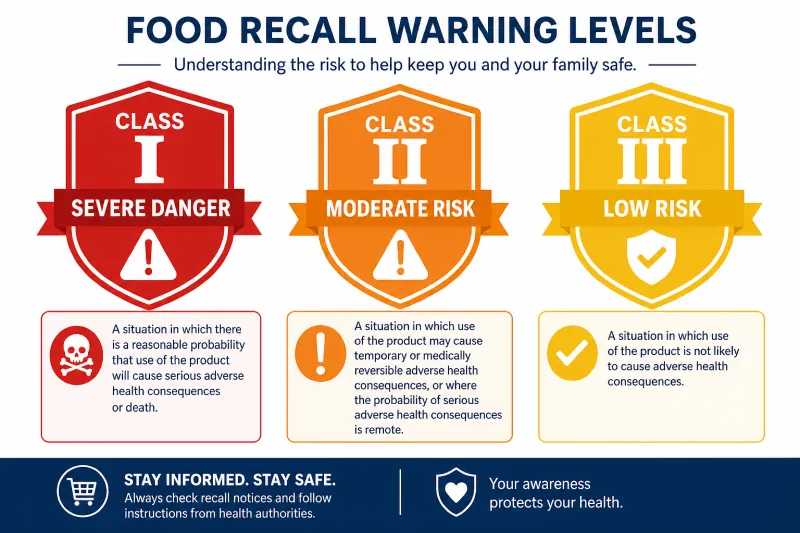
Consumer advocacy groups have raised alarms about the speed of the recall process. The PIRG Food for Thought 2026 report examined 28 foodborne illness outbreaks announced in 2025 and raised serious concerns about how long it takes from initial detection to public notification. The report highlighted that the lag puts consumers at unnecessary risk — especially for Class I recalls involving the most dangerous contaminants.
The numbers paint a concerning picture. In 2024, 1,392 people were sickened by food linked to recalls, up from 1,118 in 2023 (PIRG Food for Thought 2025). Across the five-year period from 2021 to 2025, total recalls rose 20%, with Class I recalls growing 36.4% (Trace One analysis). More recalls, more illnesses, and a process that still takes weeks — it is a combination that demands better consumer tools.
What Happens During the Delay
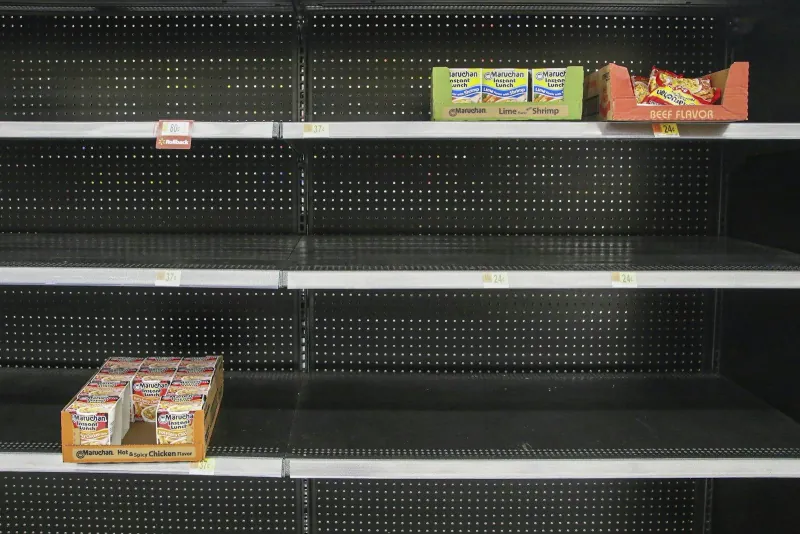
While the investigation and legal process plays out, contaminated food continues to sit on store shelves and in people's refrigerators.
Consumers go on eating products they do not know are dangerous. This is especially concerning for vulnerable populations: young children, pregnant women, elderly adults, and people with weakened immune systems.
In the Boar's Head outbreak, Listeria has an incubation period of up to 70 days — meaning someone could eat contaminated deli meat and not show symptoms for over two months. By the time the outbreak is identified and a recall is announced, the contamination window may stretch back months.
How to Protect Yourself From Recall Delays
You cannot speed up the FDA. But you can reduce your personal risk:
- Sign up for recall alerts — Do not rely on news coverage.
- Track what you buy
- Pay extra attention to high-risk foods
- Use a recall tracking app
The delay between contamination and recall announcements is a systemic reality. Understanding why it happens — and having tools that react instantly when announcements do come — is the best way to close that gap for your family.